

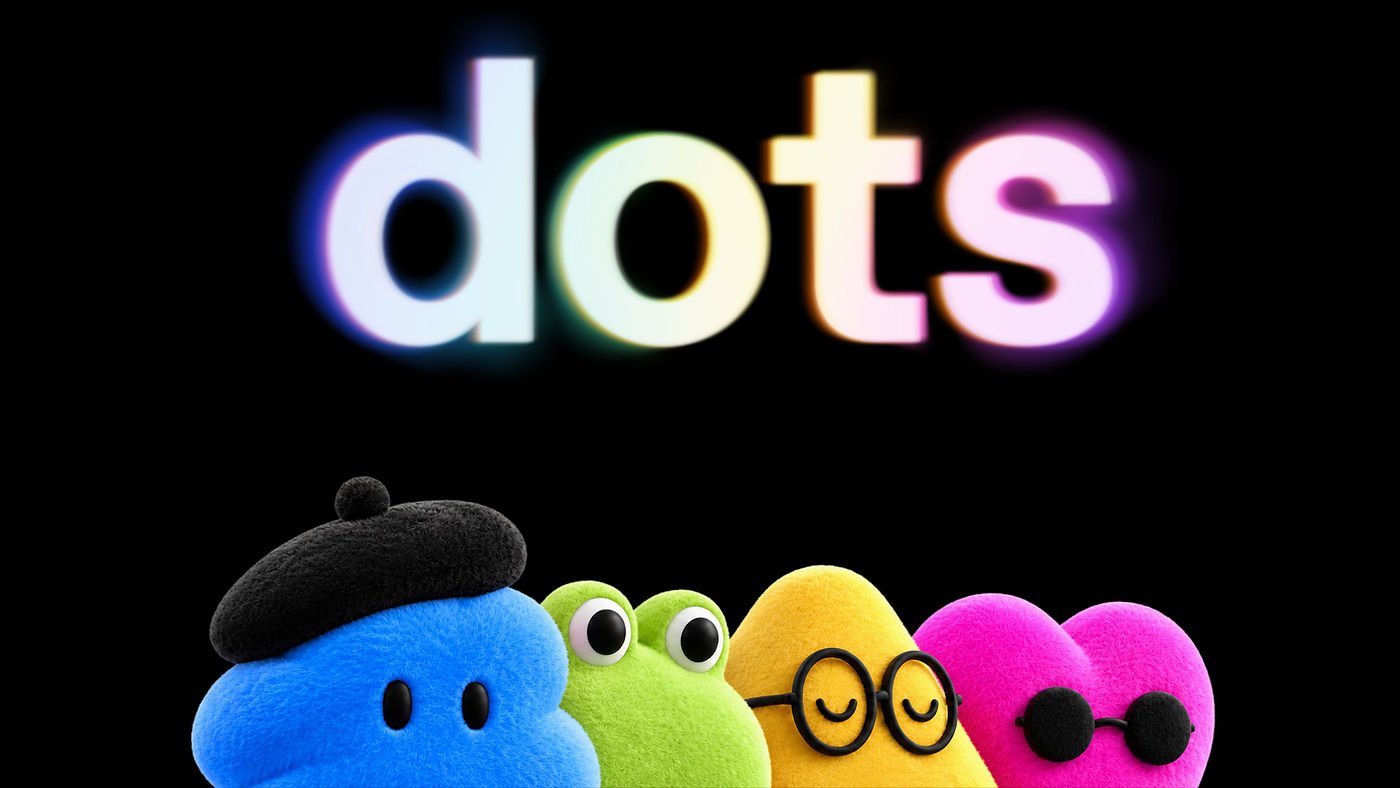
OpenAI lift the veil on Dots, AI agents designed to work continuously in the background based on the user’s goals. Built on GPT-6 Astra, they have their own cloud computing and can connect to over 4,000 applications.

Dots agents continue to work after the conversation.
OpenAI introduces Dots as a new category of always-on AI agents. Once a user entrusts it with a project, Dot can perform different tasks without requiring instructions at each step, while sending updates, questions, or approval requests when necessary.
Each Dot uses its own computer and cloud browser to do its work. The user can monitor their activity at any time and, if authorized, also connect their personal computer so that the agent can intervene directly in their work environment.

OpenAI offers several examples of this approach. A developer can ask their Dot to monitor user feedback, identify bugs, prepare fixes, test them, and submit changes for validation. A content creator may entrust you with a transcript to select excerpts, prepare notes, and write posts for social media.
The agent can also perform tasks proactively. OpenAI explains that a Dot test detected that a user had forgotten to send an invoice to a post, prepared it, and then sent it to its owner for approval. The AI company also says Dots can perform proactive searches in the background through read-only connections to authorized apps.
Dots integrates with ChatGPT, Slack and Teams
The user can communicate with their Dot from ChatGPT on desktop, web and mobile, but also via Slack and Microsoft Teams. The agent maintains context between these different channels, allowing you to, for example, launch a project in ChatGPT and then continue conversations with a team in Slack. Voice calling is also available from ChatGPT.

For now, each user can create a single main Dot, give it a name, and customize it. OpenAI next plans to allow multiple agents to work together. The company also develops specialized Dots for companies with their own identity, credentials and defined access to company systems.
These specialized AI agents are already being tested in several areas of OpenAI, including purchasing, invoice processing, email marketing, customer service, and business contracts. OpenAI is also working with Microsoft to integrate these Dots with Agent 365 security and governance controls.
OpenAI monitors autonomous actions
The Dots’ autonomy comes with rules meant to limit the actions they can perform alone. Users can set custom rules to allow certain operations, enforce validation, or block actions, while OpenAI’s built-in protections always remain applicable.
OpenAI also adds a self-assessment feature that checks for certain actions that could affect accounts or information sharing. The system determines whether the AI agent can continue, whether it should request the user’s consent, or whether the user should perform the operation themselves. Sensitive tasks, such as changing a password, remain under the user’s direct control.
OpenAI begins rolling out Dots to ChatGPT Pro and Business Premium users in several countries (Europe is currently not eligible). Business users, as well as Edu and Healthcare users, can access the beta when their workspace administrator activates it. The first Dot is included in the corresponding subscription, while conversations with it do not count towards ChatGPT usage limits.
The launch comes a few weeks after the arrival of Muse on Meta, which also offers a customizable AI assistant capable of performing tasks online. However, with Dots, OpenAI further pushes the idea of a persistent agent capable of continuing its work in the background and retaining the context of its interactions over time.


