HE Nobel Prize in Physiology or Medicine 2026 was awarded to Karl Deisseroth, Peter Hegemann and Georg Nagel for their work on light-sensitive ion channels and optogenetics. This method makes it possible to activate or inhibit precisely selected cells, in particular neurons, using light pulses. In two decades, it has become one of the main tools for studying the circuits of the living brain.

A light switch installed in the cells.
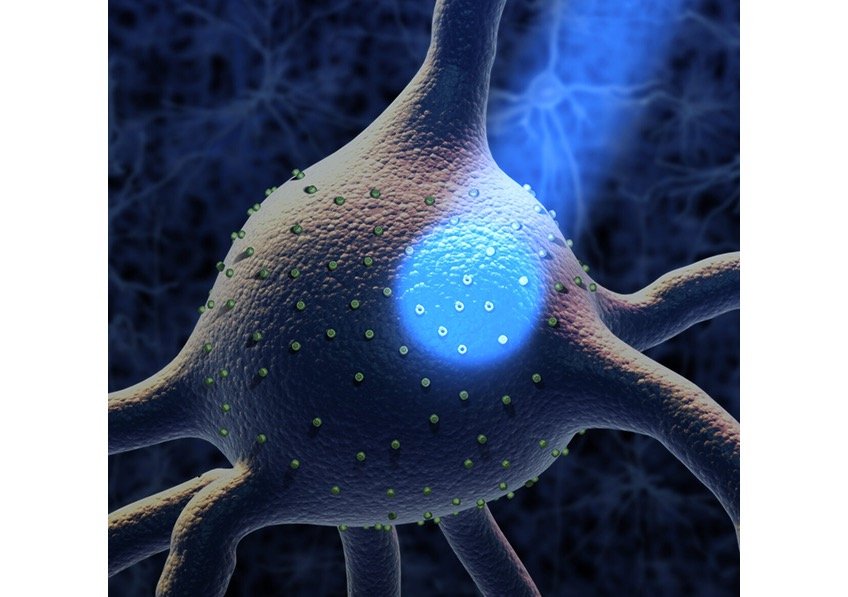
Optogenetics combines two techniques. The first refers to genetic engineering: researchers introduce the gene for a protein that reacts to light into certain cells. The second is optical: lighting of an appropriate color opens or closes this protein, which acts as a channel in the cell membrane. The passage of ions then modifies the electrical activity of the cell.
In the brain, this principle offers a precision that ancient tools did not have. Electrical stimulation acts immediately, but can affect several types of neighboring cells. Drugs may be more selective, but they spread widely and remain active for too long to serve as a quick turnaround. With optogenetics, researchers select a population of neurons and monitor their activity on a scale of milliseconds.
This ability is not just about observing a correlation. By turning a circuit on or off and then measuring the effect on behavior, scientists can prove cause and effect. Thus, the technique has been used to study mechanisms related to movement, memory, social interactions, depression and even Parkinson’s disease, mainly in animal models.
The price, equipped with 12 million Swedish crowns to be shared among the three winners, precisely recognizes this chain of innovations. Peter Hegemann and Georg Nagel characterized photosensitive proteins from a unicellular alga. Karl Deisseroth then transformed these proteins into tools capable of controlling mammalian neurons with light.
From an alga to a central tool of neuroscience
The starting point seems far from the brain: the Chlamydomonas algae moves very quickly towards the light. Hegemann suspected that a single protein could detect photons and control an ion channel. Working with Nagel, he helped identify and characterize channelrhodopsin, including channelrhodopsin-2, which is activated by blue light.
In 2005, Deisseroth’s team showed that a gene encoding this protein could make rat neurons sensitive to light. The device was then completed with very fine optical fibers to reach specific brain regions of living animals. Other proteins have been able to inhibit neuronal activity with a different color, while new variants have expanded the palette and improved speed or sensitivity.
This technological approach sheds light on a field that KultureGeek also follows through experimental systems built from cultured neurons. In both cases, the challenge is to understand how the electrical activity of living cells produces measurable behavior. Optogenetics adds very specific control, useful for isolating the function of a circuit in the middle of a much larger network.
A research tool, not yet a common treatment
The Nobel does not mean that we can now safely control the human brain with a lamp. For a cell to be light sensitive, it must produce the desired protein, usually using a gene therapy vector. It is also necessary to bring enough light to the target tissue. However, the light is scattered in the brain and the implantation of fibers or micro-LEDs remains invasive. The biological objective, the light dose, the heating and the duration of the effect must be controlled.
TO first clinical proof of concept However, it was published in 2021 in a patient with advanced pigmentary retinopathy. The cells in his retina had become sensitive to light and the glasses projected amber images that matched the system. The patient was able to locate, count and touch certain objects, which corresponded to a partial restoration of visual functions in a single person.and not to a generalizable treatment. Optogenetics remains, above all, an experimental method for investigating biological circuits with a precision that was previously impossible.