

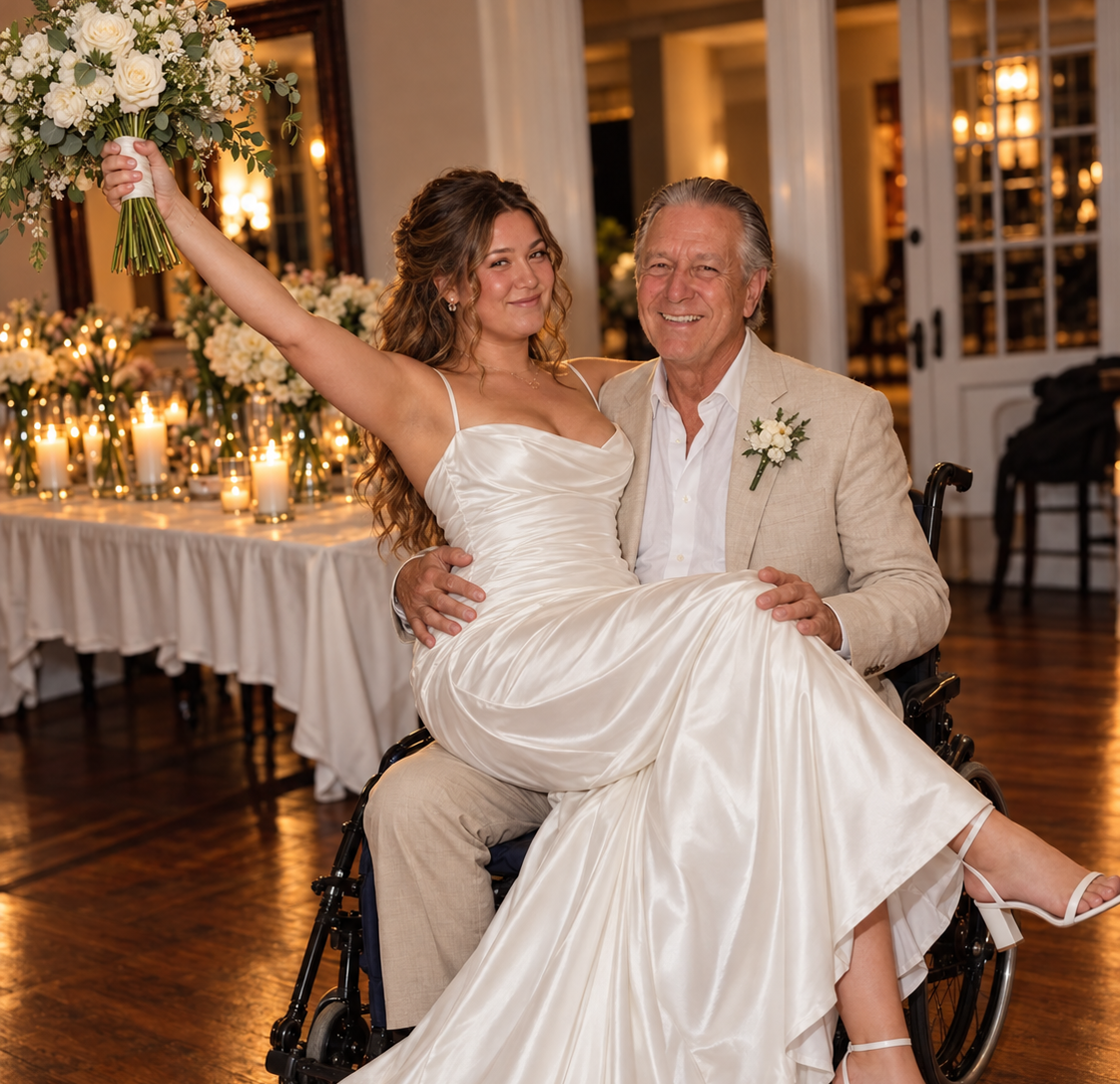
After my wife of almost fifty years died, I had money, a nice house and no one waiting for me at the door. Then a lovely woman half my age sat next to me at a charity dinner, and I ignored everyone who tried to warn me. The only person brave enough to tell me the truth was the young cleaning lady who my new wife treated like dirt.
Part 1: There is a knock on the office door
My name is Harold Whitaker. I was seventy-four when I married a woman thirty-eight years younger than me.
If you had told me at the time that within two years I would be afraid of a cup of tea in my own home, I would have laughed at you. I would have told you I was a lucky man who was given a second chance.
My first wife, Eleanor, died of a stroke after forty-nine years of marriage. We built everything together: a building supply company, a house outside of Naples, Florida, two children we were proud of. When I sold the business, I had more money than I could ever spend.
What I didn’t have was anyone to spend it with.
During the first years after Eleanor’s death, I traveled. Italy, Japan, cruise on the Norwegian coasts. But every trip ended the same way. I unlocked my front door, put my suitcase down and listened to the silence. No one asks how the flight went. No one calls from the kitchen. Just the clock in the hallway and the hum of the refrigerator.
This is where I was in life when I met Céleste.
It was a fundraiser for a hospital in Naples. She was thirty-six years old, tall and elegant, with the kind of confidence that made people turn around when she entered. She sat next to me at dinner, and for three hours she asked me questions about my life like it was the most interesting thing she had ever heard. She laughed at my old stories. She asked what Eleanor was like and she listened to the answer.
“You’ve lived such a full life, Harold,” she said, placing her fingers lightly on my wrist. “I could listen to you all night.”
Six months later, we were married in a small ceremony in my backyard.
My daughter, Rachel, took me aside an hour before the vows. “Daddy, you’ve known her for six months,” she said, her eyes pleading. “Please. Slow down. Get a prenup. Do something.”
“I’m seventy-four, darling,” I told her. “I don’t have time to slow down.”
My son Daniel didn’t come at all. He sent a one-line text that morning: I can’t watch this. I’m sorry.
This hurt me more than I let on. I told myself that my children simply could not accept that their old father could be happy again. I figured they were worried about their inheritance. God forgive me, I really believed that.
The first year was wonderful. Celeste and I traveled across Europe. We ate at restaurants I would never have tried on my own. On warm nights we would sit on the back patio and watch the stars over the water.
“I think life has given me a second chance,” I told him one day, holding his hand.
“You deserve every moment of happiness, darling,” she said, kissing my cheek.
At one point, she offered to “take boring paperwork off my plate.” I added her to my main investment account so she could pay household bills and take care of staff. It didn’t seem like anything at the time. It turned out that that was it.
After our first anniversary, the heat faded so gradually that I almost didn’t notice it.
At first it was small things. She criticized my clothes. She sighed when I walked too slowly in a parking lot. She stopped inviting my old friends and found reasons to be busy when they called.
Then she started making jokes about my memory.

While having dinner with our neighbors, I stopped for a second to try to remember the name of a restaurant. Celeste laughed and patted my hand.
“You will have to forgive Harold,” she said to the table. “He now needs to explain everything to her three times. Old age is finally catching up with him.”
People laughed politely. I smiled to keep the peace. Inside, I felt like I had been slapped in my own dining room.
And the strangest thing is that I had It has been foggy lately. Dizzy in the morning. Forgetting where I put my glasses. My heart sometimes beat in a way that frightened me at night. I attributed it to age. Celeste seemed to agree.
We had a housekeeper named Nora Delgado. She was twenty-nine years old, calm and hardworking, always dressed in a plain gray uniform. Her mother needed heart surgery that her insurance didn’t fully cover, so Nora worked six days a week and took whatever overtime she could get.
Celeste couldn’t stand it.
“Move faster, Nora,” she said from the hallway. “I’m not paying you to walk around my house.”
One day, in front of three guests, Celeste looked Nora up and down as she prepared a tray of drinks. “Keep eating like that, and I’ll have to order you a bigger uniform.”
Nora didn’t say anything. She looked down, finished putting the glasses on and walked out. I saw her wiping her face with the back of her hand in the hallway.
That night, I said quietly, “You don’t need to talk to him like that, Celeste. Not in front of people.”
“I will talk to my staff however I want, at home,” she said, without even looking up from her phone.
For the first time in our marriage, I felt ashamed of my wife.
Then came a Tuesday evening in October, around eleven o’clock.
I was in my office reviewing old letters when I heard a light knock. Before I could answer, the door opened and Nora slipped inside. She closed it behind her and turned the lock with trembling fingers.
His face was white. In her hands she held a small plastic bag.
“Mr. Whitaker,” she whispered, “I don’t know how to say this. If I’m wrong, you can fire me tonight. But if you don’t listen to me now, you might not wake up in the morning.”


