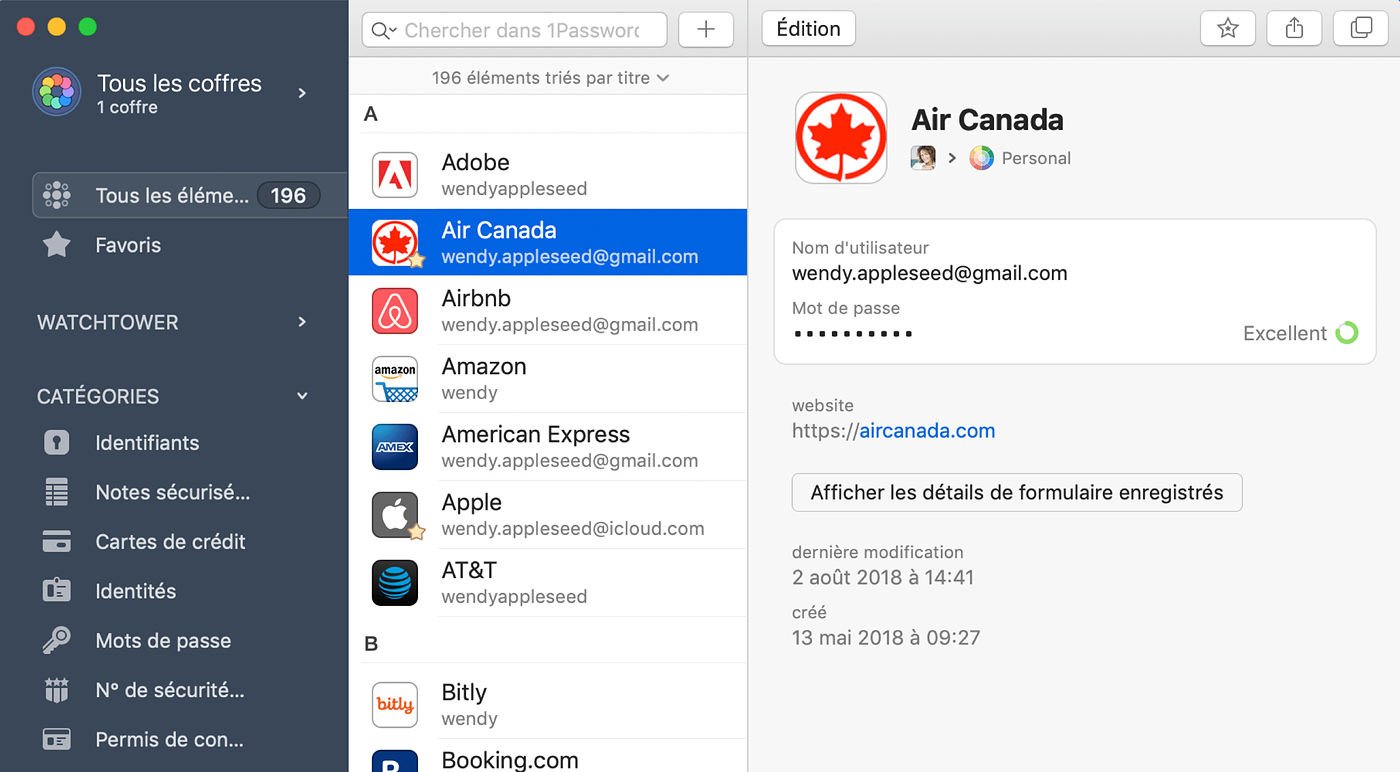
The 1Password password manager advertisement having been the victim of a cyber attack that resulted in the theft of personal data of some of its users. The hackers notably recovered names, email addresses and various information linked to accounts. However, passwords stored in the administrator, safes and encryption keys have not been compromised, the company says.

Passwords and safes have not been hacked.
1Password says it discovered the intrusion on November 19 after detecting suspicious activity on an employee’s work GitHub account. The hacker took advantage of this access to consult the company’s source code and introduce malicious code that he then sent to 1Password’s internal services. This made it possible to download administrative data relating to some of the clients. The exact number of affected accounts has not been reported.
The information recovered includes names and email addresses used to log into 1Password, but also account identifiers, creation and last login dates, and some internal metadata. The hacker also obtained public keys and Secure Remote Password Protocol (SRP) parameters used during authentication. According to the company, these last elements do not allow access to the accounts.
However, one point deserves special attention: some links sent by email for invitations, account provisioning and recovery contained tokens that were also copied. 1Password specifies that they cannot be used alone to access an account and require a one-time authentication or a code sent to the registered email address. A small number of users affected by these ongoing procedures have been notified directly.
Vaults, saved passwords, keys protecting this data, and recovery keys have not been accessed or recovered, 1Password states. The company remembers that it does not store the master passwords or secret keys of its clients. Vault encryption relies on keys that only users possess, preventing even 1Password from viewing its contents from its own servers.
1Password strengthens its protections after intrusion
The company deactivated the compromised GitHub account, revoked the token used by the hacker, and renewed any internal credentials that may have been exposed. It also strengthened controls over its GitHub and CI/CD environments used to automate the build and deployment of its software. Independent cybersecurity experts were hired to verify containment and remediation measures. Verification codes associated with invitations and recovery procedures also change from six digits to ten alphanumeric characters.
For users, the main risk now lies in targeted phishing attempts. Using names and email addresses associated with a 1Password account, a hacker can create particularly credible messages that suggest an invitation, account takeover, or a security issue. Therefore, the company recommends being careful with unexpected requests and remember that it will never request a master password or secret key by email or by phone. No password changes or other immediate actions are necessary, based on your own recommendations.
As a reminder, there have been password manager hacks in the past. This was particularly the case for LastPass, which suffered several attacks: once in 2021, twice in 2022, and once in 2026 via a service provider. Additionally, 1Password criticized the security of LastPass in 2022.