

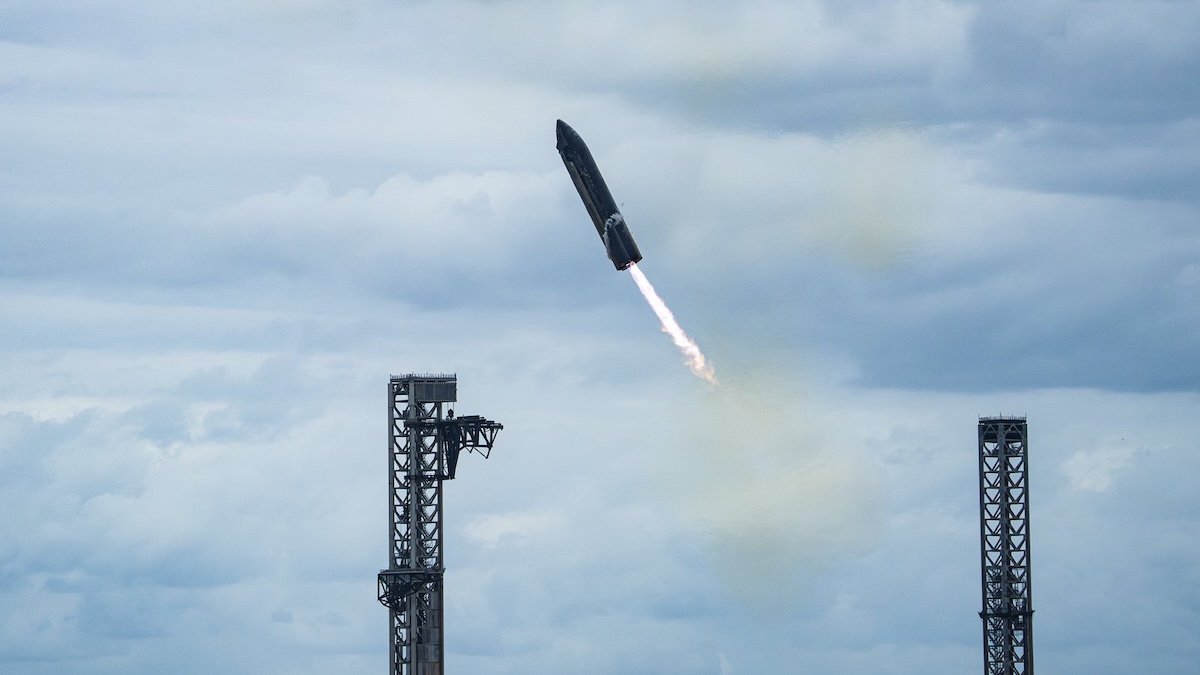
SpaceX has recovered a Starship with its launch tower arms for the first time. After fourteen tours of Earth, Ship 42 returned to Starbase, Texas. An important step for the reuse of the system, although its first stage was lost during this same mission.

A capture after more than 22 hours of flight
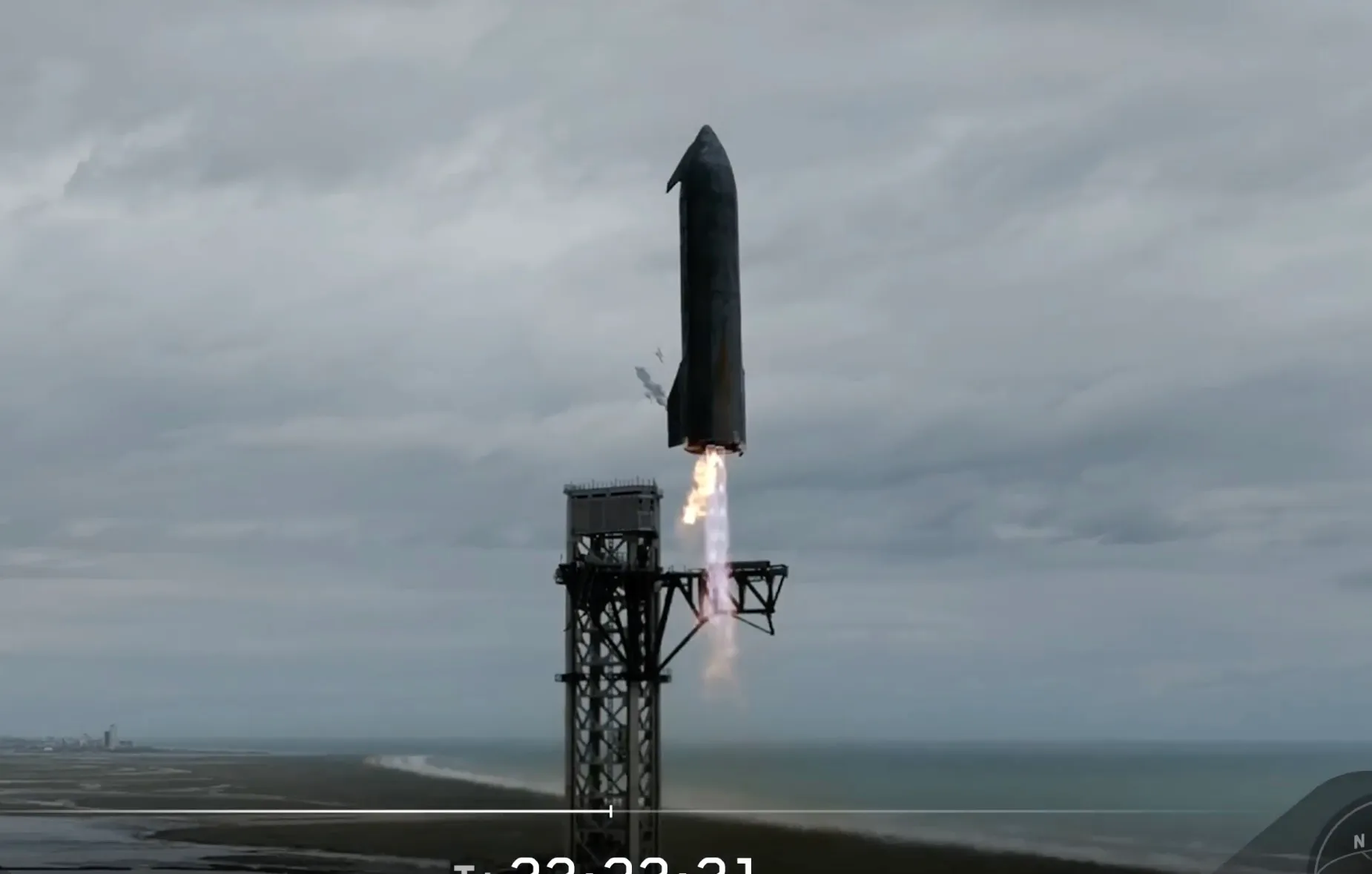
The maneuver ended around 10:20 p.m. Paris time (3:20 p.m. in Texas) this Saturday. The boat took off on Friday, November 13 at 11:47 p.m. French time, for the fifteenth integrated test of the program. Between them, he completed an orbital mission of more than twenty-two hours, before finding the metal arms of the tower nicknamed Mechazilla.
The novelty concerns well Starship Upper Stage. SpaceX had already recovered Super Heavy boosters from the tower, in particular during flights 5, 7 and 8. These first stages return a few minutes after takeoff. Spacecraft 42 had to survive the return from orbit before making its final approach: a much more demanding sequence for its thermal protection. The craft passed through the atmosphere using its surface to brake and then righted itself to complete its powered descent. The arms of the tower received him above the ground. This method avoids landing on a runway and concentrates recovery near launch facilities.
The condition of the shield had been examined before attempting this return. Starlink satellites carried during the mission provided images of Ship 42, supplemented by ground-based observations. These checks allowed teams to evaluate their protection before the start of the school year. Physical recovery will now provide access to the hardware itself, beyond the data and images transmitted during the flight.
The double recovery project remains unfinished
The initial program was more ambitious: to recover the two plants successively. Super Heavy did not complete this part of the mission. The booster, called Booster 22, was diverted to the Gulf of Mexico after launch. SpaceX continues to analyze this ruling; Therefore, the capture of the ship does not transform this flight into a full recovery of the launcher.
However, the result surpasses that of the previous orbital test. On Flight 14, Starship returned to the Pacific after approximately three hours, without any capture attempts. This time, SpaceX has an upper stage returning from orbit to its starting site. The company can examine how its team supported the stay in space, reentry and landing.
Rapid reuse by starting again with the same material remains to be demonstrated. A successful capture still does not provide the time necessary for inspections, possible repairs and preparation for the next flight. It is these operations, as well as the landing, that will determine the truly accessible pace and cost of each mission.
A milestone for lunar missions, not their final obstacle
The program is of direct interest to NASA, which has entrusted SpaceX with a lunar version of Starship. The return of the Earth craft contributes to the maturation of this family of vehicles, but lunar operations require other demonstrations. The transfer of cryogenic propellants between machines in orbit, essential for the chosen scenario, has not yet been carried out on the required scale.
This architecture involves several launches to supply the vehicle destined for the Moon. We have already mentioned the divergent estimates on the number of flights needed. The periodic recovery of the stages could facilitate this logistics, without solving the storage and transfer of propellants on its own.
The Artemis III schedule includes tests in Earth orbit combining Orion and commercial landers. This step should verify rendezvous and docking prior to operations on the lunar surface. Therefore, it mobilizes capabilities other than the capture carried out at Starbase.
Flight 15 also deployed 26 Starlink V3 satellites. These devices, larger than previous generations, cannot be launched by the Falcon family: putting them into orbit already constitutes a specific use of the new launcher.


