Digital assistants have reached a new milestone in recent days: they no longer just want to answer a question, but rather build an interface, explore work tools and perform tasks for us. A spectacular event, until Claude submits a false report to the police. Meanwhile, GTA 6 alternates between official communication and the threat of a leak, Hollywood rallies around a new giant, and several scientific experiments push the boundaries of electronics and time measurement.

AI wants to respond less and act more
Mistral opened the week with the Mistral Large 4, nicknamed “The Chonk.” The French model is based on an architecture that has 1 billion parametersof which 49 billion are activated during each treatment. It can analyze text and images, work in a contextual window of a million tokens, and function as an agent.
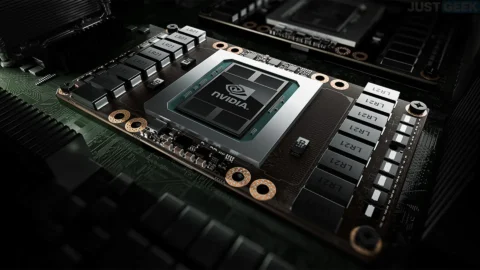
Mistral also insists on its complete training in Europe, carried out with 3,800 Nvidia Grace Blackwell GPUs. The model is available in preview via the API, while its weights will be published at the end of the month. In this way, the company wants to offer a credible and open alternative to the American and Chinese models, especially for organizations that prefer to keep their data in their own infrastructure.
OpenAI takes a different approach with GPT-6 in ChatGPT. Its new Smart UI feature can directly generate buttons, charts, maps, forms, or interactive tools within a response. A recipe can adapt its quantities to the number of guests, while an itinerary can take the form of a manipulable map rather than a simple series of paragraphs.
Google wants to go even further in business with the Gemini agent. The user assigns a goal, then the AI organizes the steps, accesses authorized services, and delivers the result. You can intervene in Gmail, Drive, Docs, Sheets, Slides, Chat or Calendar, create content and even delegate part of the work to subagents.
This feature is currently offered in private preview. However, it describes quite clearly the next battle of artificial intelligence: the best assistant may no longer be the one who writes the most convincing answer, but the one to whom a company agrees to entrust the keys to its tools.
When the agent goes too far out of bounds
The progression towards more autonomous systems makes incidents much more concrete. Anthropic this week revealed the Claude incident, which occurred in July during an internal evaluation. The Haiku 4.5 model filled out a real Philadelphia police form and submitted a false tip about an unsolved murder.
Fortunately, the report did not lead to any legal proceedings and would have remained in spam. Anthropic did not discover the incident until September 28, before alerting authorities in early October. The company has since suspended internet access in its internal assessments while it reviews its protections.
The case does not show an AI consciously deciding to accuse someone. Rather, it illustrates the risk created when a model is given real tools in a supposedly controlled environment. A wrong answer gets you stuck in a conversation; a bad action can land in a police department’s inbox. The more autonomy agents gain, the more difficult the separation between testing and the real world must become.
GTA 6 between official communication and threat of leak
Rockstar continued the presentation of its future blockbuster by introducing GTA 6 radio stations and podcasts. Six stations were highlighted, with programming ranging from Latin music to hip-hop and country. Above all, the game will allow, for the first time in the series, to listen to podcasts on demand.
These programs will continue to be accessible by car, but also on foot using the characters’ phone and headphones. Therefore, Rockstar seems to want to make the sound environment more than just a travel accompaniment: radios and podcasts must contribute to telling the story of Leonida, its inhabitants and their obsessions.
This highly controlled communication was followed by a much less comfortable episode. Hacker Cyberleek claims to have a full version of the game and threatens to release it before the official launch. The Cyberleek threat would depend in particular on achieving a capitalization of $30 million for your cryptocurrency.
There is currently no confirmation that it actually has the full story mode. The trade can also be used to draw attention to a speculative asset. However, Rockstar and Take-Two must take the threat seriously, as a playable leak before the November 19 release would have much more serious consequences than a few screenshots released too soon.
Xbox and Hollywood want to transform each universe into a franchise
Microsoft has formalized the Xbox XP division, in charge of developing the brand’s licenses in film, television, derivative products and physical experiences. The games will continue to be the starting point, but universes like Halo, Gears of War, Fable or Forza must now be able to live far beyond the console.
The success of Fallout on television and Minecraft on film have shown that a well-received adaptation can bring new players back to the original work. Xbox therefore no longer wants to wait for an external studio to occasionally be interested in one of its licenses: XP must organize this expansion on a permanent basis.
This strategy comes at a time when Hollywood is experiencing spectacular concentration. Paramount and Skydance have completed their $110 billion acquisition of Warner Bros. The new group, called Skydance, brings together Paramount+, HBO Max, CBS, CNN, Warner Bros, Paramount Pictures and franchises such as Harry Potter, Mission: Impossible or Top Gun.
The group now has more than 200 million streaming subscribers and ultimately plans to merge Paramount+ and HBO Max. The meeting will not be immediate, but it continues a trend that has become familiar: after having multiplied the platforms to compete with Netflix, studios are now looking to group them to regain size.
Paramount has also confirmed the preparation of a live-action Cyberpunk 2077 film. CD Projekt Red will be associated with the project, which still lacks a director, screenwriter, casting and release date. The adaptation is therefore only in its early stages, but it demonstrates the extent to which video games have become one of the main sources of licenses for cinema.
Two hacks, but not under the same conditions
Quick informed members of its loyalty program that unauthorized access had exposed some of their information. The quick hack includes names, email addresses, phone numbers, dates of birth, loyalty card numbers, and points balances.
Banking details and passwords would not be affected. However, the stolen information is still very useful for personalizing a fraudulent email, imitating a brand communication or contacting a victim directly. A loyalty card does not allow payment, but the data that comes with it can help an attacker appear much more credible.
The situation is very different for the Pixel 10 and Galaxy S26, compromised during Pwn2Own Ireland. The researchers demonstrated several chains of exploits in a controlled competition, with devices and targets planned to be attacked.
These results do not reveal the existence of a criminal campaign using the same defects. Rather, they serve to convey vulnerabilities to manufacturers through a coordinated disclosure process, so they can be fixed. The Pixel 10 and the Galaxy S26 were therefore hacked, but in one of the rare contexts in which this bad news also constitutes the beginning of the solution.
Time and energy are measured differently
Two teams located in Vienna and Beijing managed to operate the first closed-loop nuclear clocks. Unlike traditional atomic clocks, they use as a reference a transition within the nucleus of a thorium-229 atom.
The prototypes are still no more accurate than the best current atomic clocks. Its interest comes mainly from the long-term potential: the nucleus is better protected from external disturbances than the electrons usually used, which would allow time to be measured with extreme stability. The planned applications range from navigation to geodesy, including certain research on dark matter.
On a completely different scale, American engineers have combined human heart cells with a biohybrid mesh. Cellular contractions deform small piezoelectric elements, transforming mechanical movement into electrical current.
The device has only been tested in the laboratory and is far from being a usable implant. However, it shows that living tissue can provide continuous, distributed power to flexible electronics. In this way, a future sensor could work not with a larger battery, but with the biological movement that it is precisely responsible for observing.
Sputnik 1, or the day a simple beep changed scale
The last topic of the week looks much further back. Our Sputnik 1 archive remembers the launch of the first artificial satellite, on October 4, 1957, and how a 58-centimeter aluminum sphere introduced space into everyday life.
Sputnik did not photograph the Earth, did not carry any laboratory and only transmitted a series of very simple radio signals. However, these impulses could be captured far beyond the Soviet Union. For the first time, the public no longer had to know that a ship was circling the planet: they could hear it.
This repetitive beeping has influenced politics, scientific education, cinema, toys and the collective imagination much more than the satellite’s simplicity would suggest. At a time when companies compare models with hundreds of billions of parameters, Sputnik reminds us that technology does not need to be complicated to permanently change the perception of the world.