

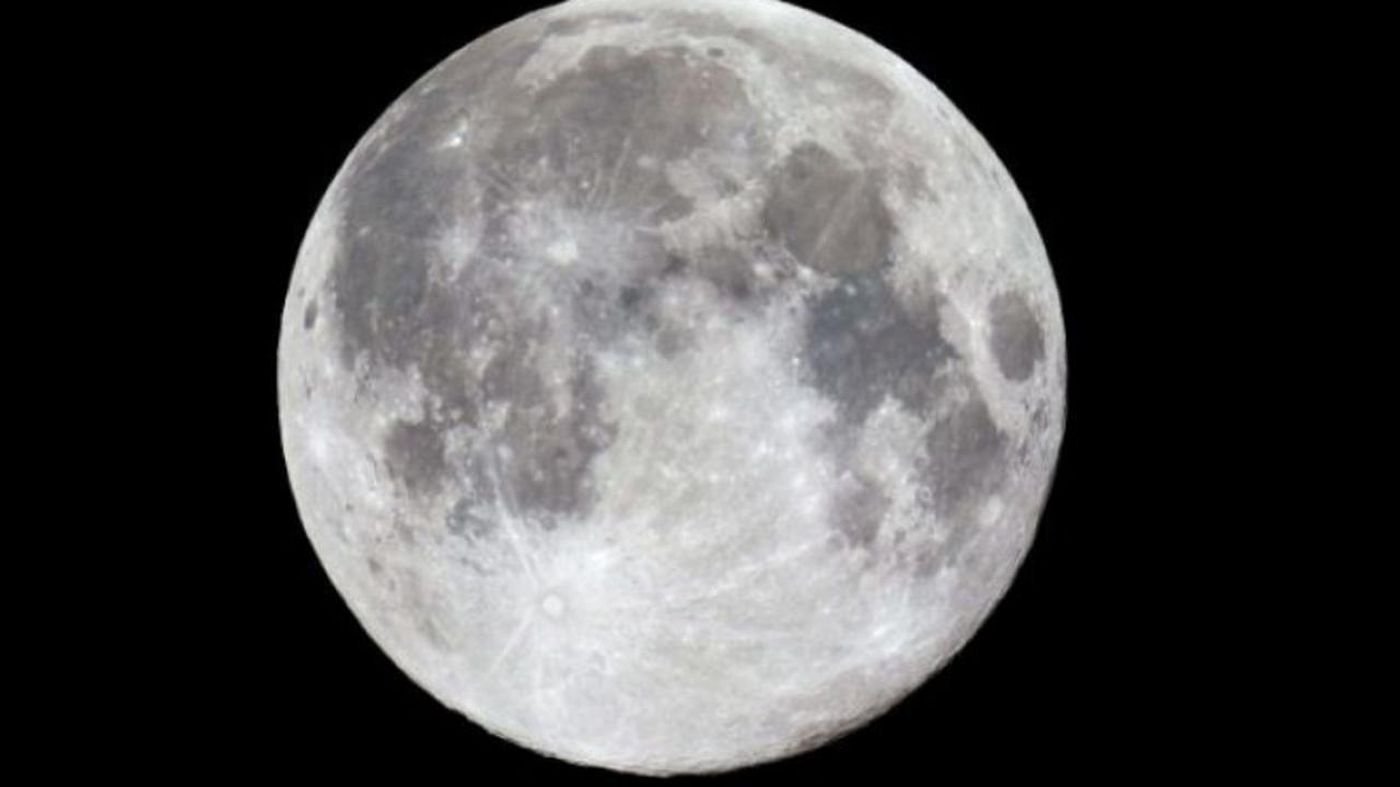
The Moon is not as geologically fixed as it seems. A new study published in The Planetary Science Magazine Liza more than 10,000 relatively young faults on its surface and estimates that its radius has decreased between 42 and 46 meters in the last 400 to 800 million years.
The Moon contracts as it cools
Since its formation about 4.5 billion years ago, the Moon’s interior has been gradually losing heat. As it cools, its volume decreases slightly, compressing its crust and causing thrust faults to form. On the surface, these appear in the form of scarps, sometimes several tens of meters high.

Thanks to images from the Lunar Reconnaissance Orbiter, researchers were able to map these structures with unprecedented precision. The same satellite today powers new tools such as AI developed by NASA and IBM to map the Moon.
Calculations suggest a radius contraction of between 6 and 11 centimeters per million years. This speed seems small, but it is enough to generate estimated stresses of around 4 megapascals, compatible with certain lunar earthquakes recorded since the Apollo era.
A thick layer of debris would have delayed cooling
The study also provides an explanation for the surprisingly recent nature of many failures. A thick, porous layer of megagolith, formed by rocks pulverized by billions of years of impacts, could have acted as a thermal blanket. This insulation would have retained internal heat longer before allowing late contraction of the crust.
These results are of direct interest for future human missions. As NASA prepares infrastructure for a future lunar base, the location of faults and the risk of earthquakes will need to be integrated into the choice of sites. The lunar caves planned as shelters should also be evaluated from this angle.
Therefore, the Moon continues to change, as slowly as surely. And beneath its apparent immobility, its internal cooling continues the transformation of its surface even today.


