

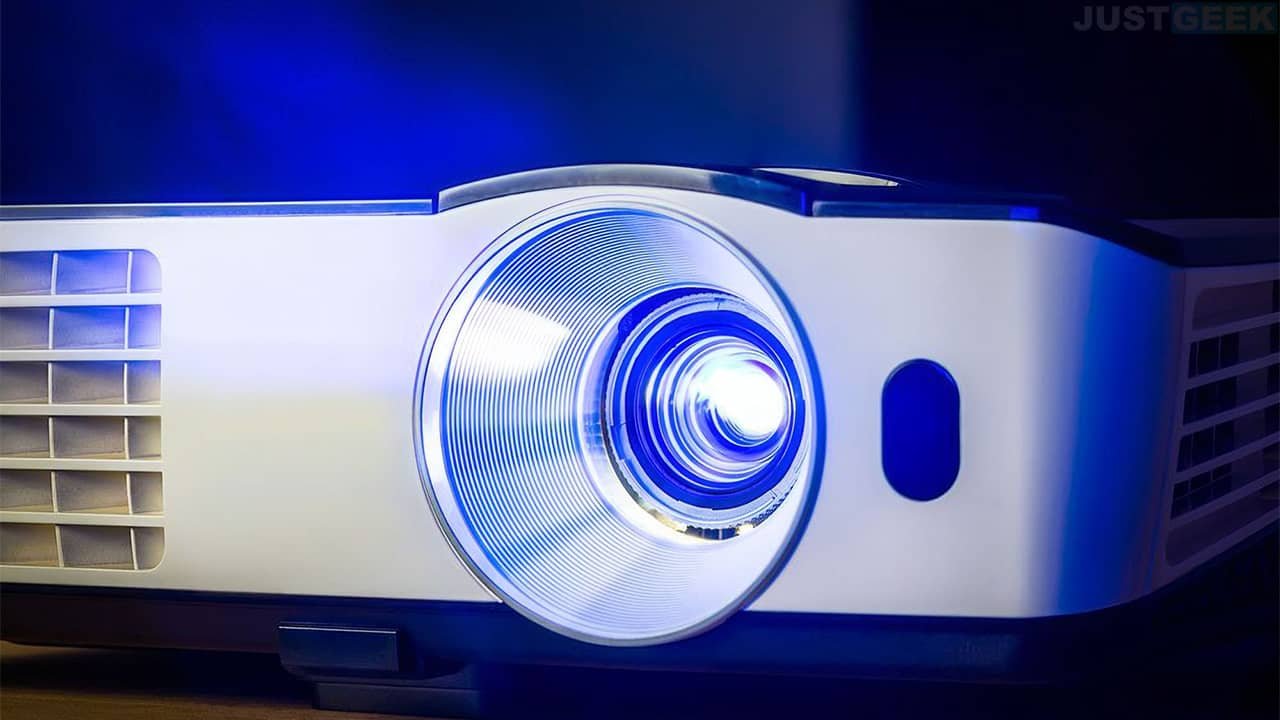
Video projectors are one of the essential equipment in business. They are most often found in meeting rooms for PowerPoint presentations or video conferencing. Today, video projectors come in a wide variety of models, each with its own features and functionality. For your business it is preferable to opt for a professional video projector, but how to choose? We tell you everything!
The different types of video projectors.
To choose well, it is important to know the different types of video projectors: this way we can distinguish office video projectors which have been specially designed for professional use. As such, they are much more compact, bright and functional. then we have home theater video projectors intended for leisure (to watch movies, play video games, etc.). They present most of being 3D, with better image quality (HD resolution).
For the rest, there are also special video projectors that cover very specific needs:
- Short Throw Video Projectorsintended for small spaces.
- Portable video projectors (mini/pico) for convenient use while traveling.
- wifi video projectors that you can easily connect to the Internet.
- 4K (or UHD) video projectors whose sharpness of the projected images and videos is simply perfect.
- Laser video projectors (4K or HD resolution) whose brilliance is incredible.

The main criteria for choosing
Now that you know the different types and models of projectors, it’s a matter of choosing a model based on the needs of your business, as well as your budget. As for the criteria to take into account to make the right decision, here are the main ones to remember:
Format and resolution
The resolution of the projector determines the quality of the images projected by the device. It corresponds to the number of pixels that make up an image, and the higher this number, the better the quality. Below we detail the different formats and resolutions currently offered on the market:
- 4:3 format – SVGA resolution (800 × 600 pixels)
- 4:3 format – XGA resolution (1024 × 768 pixels)
- 16:10 format – WXGA resolution (1280 × 800 pixels)
- 16:9 Format – HD Ready Resolution (1280 × 720 pixels)
- 16:9 format – Full HD resolution (1920 × 1080 pixels)
- 16:10 format – WUXGA resolution (1920 × 1200 pixels)
- And finally the 16:9 format – Ultra HD 4K Resolution (3840 × 2160 pixels)
for a A video projector for your meetings.The ideal resolutions are: XGA and WXGA for small budgets and Full HD and WUXGA for Premium options.
Reversing distance
This criterion is important depending on the size of your meeting/screening room. The size of the projected image depends on the distance the video projector is moved back. To calculate the ideal reversing distance, you must Multiply the projection ratio by the width of the projection screen. Please note that the throw ratio of the device is usually indicated on the data sheet.
- Launch ratio less than 1 for a retreat distance of less than 5 meters.
- Launch ratio between 1 and 2 for a retreat distance of 3 and 5 meters.
- Launch ratio greater than 2 For large rooms, the video projector can be installed at the back of the room (retreat distance greater than 5 meters).
What type of screen?
- there are the manual wall screens whose projection screen must be manually placed and unrolled on a wall.
- Then we distinguish the electric wall models whose canvas unrolls automatically when the device is turned on.
- There are also the ultraportable screensSpecially designed for use while traveling.
- And finally you have the tripod models that allow you to move from one projection room to another without problem.

Brightness and contrast
The brightness of the video projector. It depends on your meeting room: the brighter the room, the brighter the device should be. Therefore, the ideal is to opt for a powerful model, with a minimum power of 3000 lumens.
As for the contrastThis is the difference in light intensity between the light and dark tones of the projected images. Contrast is expressed in ratios and for good image quality it is better to opt for a video projector with a contrast greater than 800:1. Note that this relationship means that the brightest point is 800 times brighter than the darkest point.
Three lamp options.
- Video projectors with mercury lamp (UHP) : Being able to last up to 3000, even 5000 hours, UHP lamps are very bright. They are mainly found in home theater models.
- Video projectors with LED lamp. : In addition to being economical, LED lamps are also more durable than traditional models, with a lifespan 5 times longer.
- Laser projectors (4K resolution) : These lamps are very bright and have a very long lifespan. They last 5 to 10 times longer than traditional lamps.
OTHERWISE ! Noise is also a criterion to take into account. The ideal would be to opt for a video projector whose sound level does not exceed 30 decibels. Beyond that, the noise could be annoying and disrupt your professional meetings.
What projection technology to choose?
- LCD projection or 3 LCD (liquid crystal display) for natural colors that do not tire the eyes.
- DLP (Digital Light Processing) Projection for sharper, more detailed images, excellent contrast and truly brilliant colors.
- LCoS, SXRD and D-ILA projection for truly excellent image quality with beautiful colors and excellent contrast.


