

The transition from a mundane routine to a life-altering crisis occurs in the space between heartbeats. For most students, the drive back to campus after a high school lunch break is a forgettable, rhythmic ritual. But as recent events on railway tracks across the country reveal, these ordinary moments can suddenly fracture, demanding a choice that defines a lifetime. When a massive freight train enters the frame, the margin for error evaporates, replaced by the screech of steel on steel and the primal vibration of the earth. These stories of young people at the tracks explore more than just courage; they map the profound landscape of human instinct and the social scripts that dictate who steps forward and who stays back.
The “No-Time-to-Think” Reflex
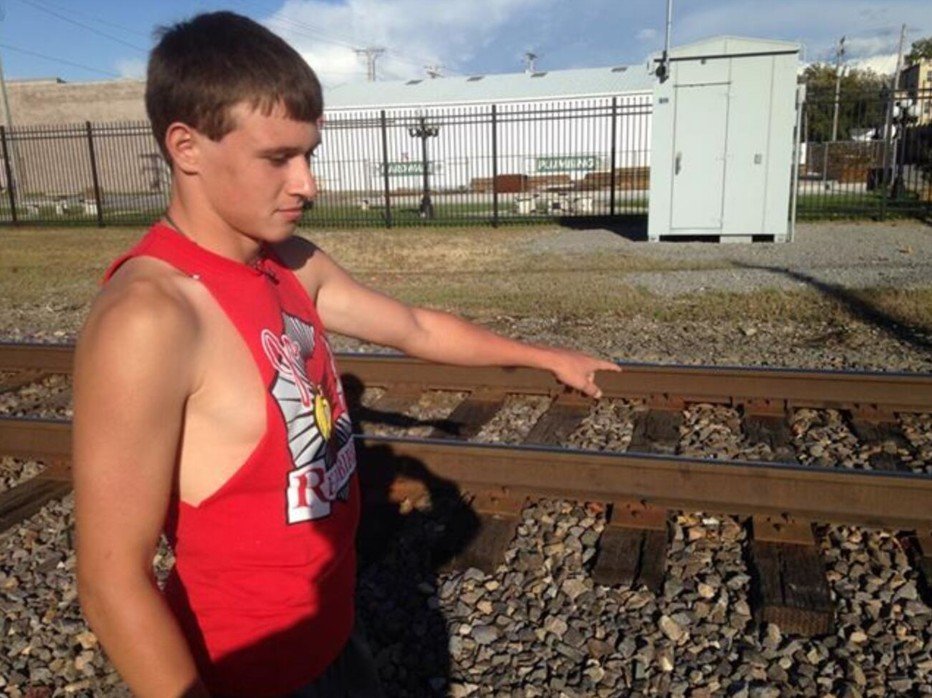
In West Frankfort, Illinois, Colton Essary was navigating the familiar streets back toward Frankfort Community High School when the routine shattered. Beside him in the truck, his friend Maddie Hand saw the nightmare first: a woman had fallen onto the tracks, her screams barely audible over the roar of a fast-approaching train.
Heroism is rarely a solo performance of the soul; it is often a collaborative spark. It was Hand who provided the initial jolt, yelling at Essary to stop the truck and run. While Hand was gripped by a visceral terror, covering her eyes as the massive engine bore down, Essary’s body took over. He abandoned his truck in the middle of the road and sprinted toward the tracks. He reached the woman and hauled her to safety just moments before the train thundered through the crossing. Psychologically, this “autopilot” for good suggests that the brain doesn’t consult a map in these moments; it simply fires.
“It wasn’t really something you had time to think about.”
This reflexive bypass of conscious deliberation reveals a surprising aspect of our psychology: in the face of immediate, lethal danger to another, the instinct to preserve life can completely override the analytical drive for self-preservation.
The Burden of Inaction: Why We Actually Step Up
While the initial movement is a reflex, the persistence required to finish the rescue is fueled by a heavy sense of moral obligation. The woman Essary saved hadn’t just tripped; she had broken her arm during the fall, leaving her physically anchored to the path of the train. For a bystander, the sight of a vulnerable person trapped creates an immediate psychological weight.
Essary’s perspective suggests that the “hero” isn’t just running toward a victim; they are running away from the unbearable ghost of who they would become if they did nothing. The potential for lifelong haunting is a powerful, if invisible, motivator.
“I had an obligation to help and if I wouldn’t have made it there in time, I couldn’t really live with myself. Seeing that happen right in front of me and knowing I didn’t do anything to help.”
The Fragile Line Between Adventure and Tragedy
The same adrenaline that fuels a rescue can also lead to catastrophe. This is the dark mirror of the train-track narrative: the impulse for adventure. In Longmont, Colorado, 17-year-old Anna Beninati, a student at Colorado State University, was with three others attempting to “hop” a moving freight train—a dangerous subcultural rite of passage. The attempt turned tragic when Beninati slipped, falling beneath the wheels and losing both of her legs.
This incident marks the fragile line where youthful invincibility meets the cold reality of industrial physics. However, the social narrative shifted in the aftermath. While two companions were cited for trespassing, Longmont Police Cmdr. Jeff Satur chose a path of radical empathy regarding Beninati. Deciding not to file charges, Satur noted that the community felt a profound compassion for her, choosing not to add legal “extra stress” to her physical trauma. It is a rare moment where the law yields to human tragedy, acknowledging that some lessons are paid for so dearly that a citation becomes an irrelevance.
The Brotherhood of the Tracks
Heroism often requires a catalyst—a social leader who provides a script for others to follow. In Ottumwa, Iowa, senior Paul Clanry was looking out a window at Gateway High School when he saw an older man tumble onto the tracks behind the building. Clanry didn’t just act; he mobilized. He recruited his friends, Clinton Ring and Daveson Hartman, effectively creating a “superhero” unit on the fly.
By calling out to his peers, Clanry broke the “bystander effect,” that psychological paralysis where individuals wait for someone else to move first. His leadership gave Ring and Hartman the permission to be brave. Together, the trio lifted the man to safety, proving that while one person can notice a tragedy, it often takes a collective to prevent it. Their shared philosophy was stripped of ego and distilled into a single directive.
“Be righteous for the people around you.”
Small Mercies and High Stakes
The ripples of these interventions move through the community in quiet ways. When Essary and Hand finally walked back into Frankfort Community High School, they were late for class—a minor infraction that usually carries a penalty. But Principal Bethany Shaw recognized that the rigidity of school bells should always bend for the gravity of a life saved. She excused the tardiness, a small mercy that validated their choice to prioritize a stranger over a schedule.
The stakes of that choice are best measured in generations. Because a teenager stopped his truck, a woman returned home to her seven grandchildren. Those are seven lives that will grow up with a grandmother, and perhaps dozens more descendants who will owe their existence to a split-second decision made on a lunch break in West Frankfort.
Conclusion: A Final Thought on Awareness
These stories offer a poignant rebuttal to the idea of a disconnected youth. They reveal a generation capable of profound moral clarity and the physical grit to back it up. They challenge us to look up from our own lives and consider our “obligation” to the people standing on the edges of our own paths. True heroism is not a superpower, but a heightened state of presence.
The safety of a community ultimately rests on the shoulders of those who choose to remain truly aware of what is going on around them.


