

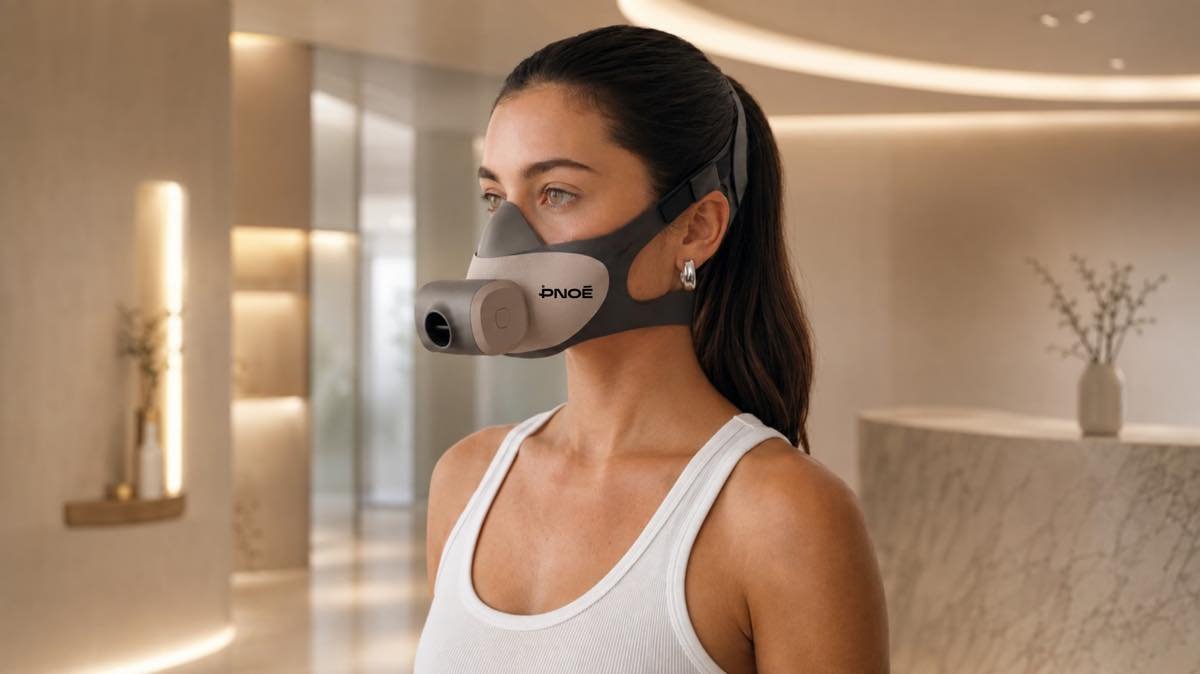
The PNOE prepares for October 1 a new respiratory analysis device capable of performing a metabolic test without a trained operator. With PNOE 2.0The user simply puts on the mask, presses a button, sits and breathes for eight minutes to obtain a series of measurements related to their metabolism and physical condition.

A breathing test reduced to eight minutes
The system is based on indirect calorimetry. In particular, it measures the amount of oxygen consumed and carbon dioxide released when breathing. These gas exchanges allow us to estimate energy expenditure at rest, the way the body uses fats and carbohydrates, as well as certain indicators of cardiorespiratory capacity, including VO2 max.
PNOE affirms that its platform analyzes 23 biomarkers. The highlighted list includes resting metabolism, metabolic flexibility, and parameters associated with performance. However, the term biomarker must be understood within the commercial framework defined by the company: not all results have the same medical meaning and several are calculated from respiratory gases rather than directly measured by a blood test or clinical examination.
The main novelty of version 2.0, therefore, is not the measurement principle, already used by current PNOE equipment, but its automation. The above system requires the intervention of a trained person to install the subject and perform the test. The new model must control the procedure alone and produce a result without constant assistance, with the aim of equipping gyms or wellness centers that do not have a dedicated technician.
One shared box, one skin saved by each user
The electronic components are removable from the silicone mask and its straps. In this way, a room can share the measurement module between several clients, while each one keeps the piece in contact with their face. This choice responds to both the question of hygiene and the cost of the equipment currently intended for professionals.
PNOE does not foresee direct sales to individuals. The company offers subscriptions ranging from approximately $400 to more than $1,000 per monthdepending on the contracted services. Their clientele already includes chains and establishments such as Equinox, Four Seasons, Restore Hyper Wellness, NBA teams and Red Bull. The manufacturer hopes that the autonomous mode will expand this market to structures whose personnel could not previously manage the tests.
The software combines respiratory results with information from watches, blood tests or body scans to generate training and nutrition recommendations. This approach is part of a broader trend: the Withings Body Scan 2 scale, for example, claims to have 60 biomarkers, while the Pixel Watch 5 increases the number of health tracking features. PNOE is notable for requiring a dedicated breathing session rather than a passive measurement at the wrist or under the feet.
A wellness device, not a diagnostic device
PNOE 2.0 has not received FDA clearance as a medical device. Its CEO, Apostolos Atsalakis, explains that the company positions it as a wellness and performance product, without medical recommendations. Centers can use it to guide a sports or nutritional program, but not to diagnose a disease based on the result.
This limit is important given the promises of “laboratory-level” measurements. The actual accuracy of the new autonomous mode will need to be evaluated under various conditions, including when the mask is poorly fitted, the user is speaking, or the environment disrupts the measurement. The official site details the general principle and the 23 indicators, but does not yet publish an independent validation specific to the 2.0 hardware.
The company has approximately 110 employees and develops 85% of its activity in the United States, while expanding in Europe, Latin America and Asia. She says she has raised $22 million in total and is profitable. The October 1 launch should primarily interest your professional clients; PNOE does not communicate a single purchase price, nor an availability schedule for individuals, nor any action before a medical authority.


