

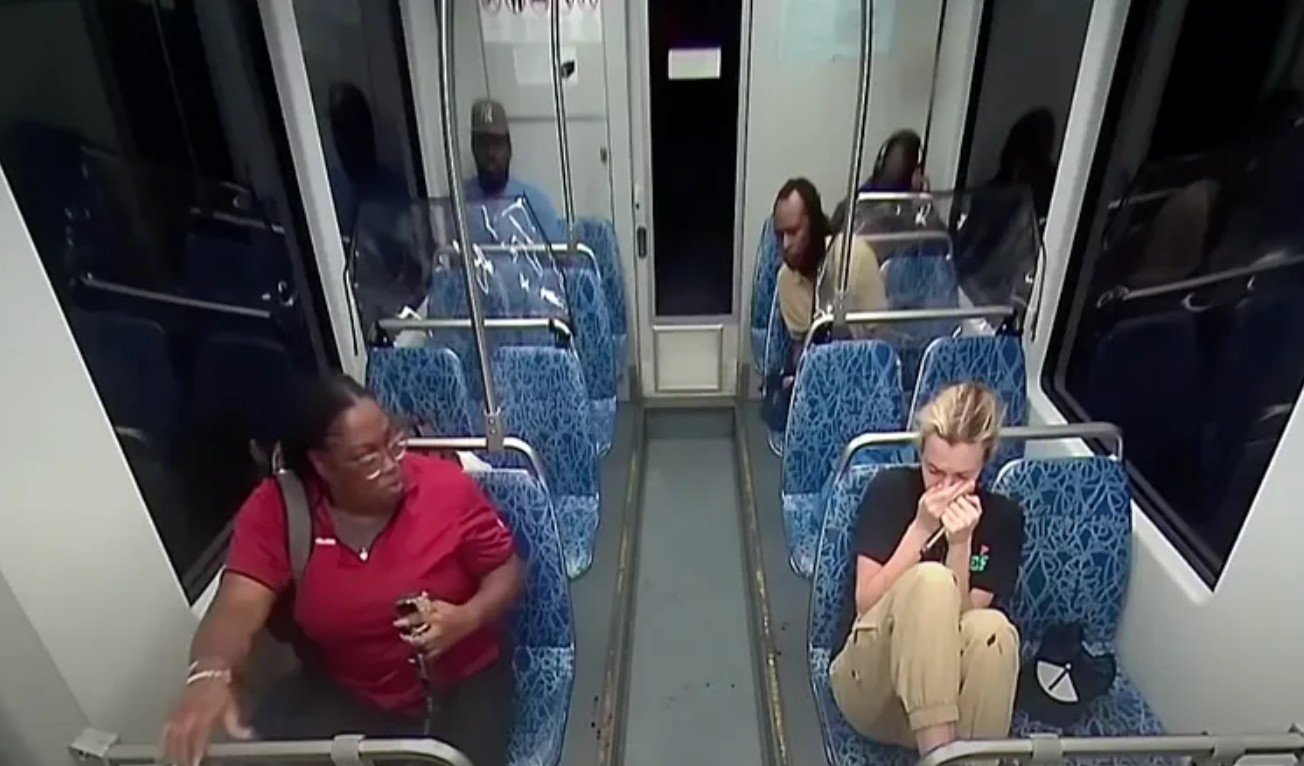
There are moments of violence that should inherently command a nation’s collective outrage and demand immediate reflection. The tragic final moments of Iryna Zarutska—a young Ukrainian refugee who lost her life in a horrific attack—represent one of those moments. Yet, the broader public reaction to her death has left many questioning the consistency of our societal empathy.
The murder of Iryna Zarutska on a train in North Carolina is more than just a localized tragedy; it serves as a stark portrait of the disparities in media coverage and political discourse.
The Anatomy of a Preventable Crime
The details surrounding the incident are chilling. Recorded by security cameras, the fatal stabbing unfolded in public, reportedly while passengers watched without intervening. Adding to the profound sense of injustice is the background of the perpetrator: an individual with a documented history of 14 prior offenses.

This was not merely a random act of violence, but a fatal failure of the justice system. It raises a critical, unavoidable question: how was a violent repeat offender free to walk the streets and ultimately take a young woman’s life?
The Filter of Public Outrage
In recent years, we have seen massive public mobilizations, widespread protests, and unified media campaigns in response to tragic deaths. These responses are vital mechanisms for demanding accountability. However, the deafening silence surrounding Zarutska’s death forces an uncomfortable conversation about which tragedies receive this level of national amplification.
Why did this brutal crime fail to shake the collective conscience on a national scale?
Critics argue that the lack of outrage is tied directly to narrative convenience. In an era where media cycles are heavily driven by established frameworks—such as discussions around systemic racism—victims who do not fit seamlessly into these specific scripts are frequently overlooked. Zarutska, a white European refugee, did not fit the prevailing narrative mold. The unsettling reality is that public grief is sometimes directed by ideological utility, leaving certain cases buried in relative silence.
A Dual Injustice
When tragedies are filtered through the lens of political convenience, the victims suffer a dual injustice. In many ways, Iryna was killed twice: first by the weapon that ended her life, and second by the calculated indifference of a media and political ecosystem that seemingly chooses which lives warrant a national outcry.
This selective outrage fundamentally undermines the pursuit of universal justice. If societal anger over preventable deaths is only activated when it is politically useful, it ceases to be about true justice or human rights.
Demanding Accountability for Systemic Failure
Highlighting the systemic breakdowns that led to this tragedy, political commentator Charlie Kirk noted the following before his account was suspended:
“If we want things to change, it is 100% necessary to politicize the senseless murder of Iryna Zarutska, because it was politics that allowed a violent monster with 14 prior offenses to be free on the streets to kill her.”
While the term “politicize” often carries a negative connotation, in this context, it is a demand for structural accountability. The policies that govern bail, sentencing, and criminal rehabilitation are inherently political. When those policies fail—resulting in the loss of innocent life—demanding legislative and systemic change is not only appropriate; it is a moral obligation.
We must ensure that Iryna Zarutska is not forgotten. Her death should stand as a catalyst for demanding a justice system that protects the innocent and a media landscape that values every life, regardless of how it fits into a predetermined political script.


